
Helping build a design Center of Excellence
Helping Bancolombia make design a repeatable enterprise capability, with clearer governance, roles, and a path for adoption.
- Design strategy · DPM · DesignOps

- Bancolombia / IBM • Jul • Nov 2019

The starting point
Bancolombia wanted design to have a stronger role across the organization. The work was not about redesigning one banking product. It was about understanding the current practice and defining how people, processes, and standards could support better decisions across business units.
Working with the IBM iX team, I helped shape the discovery and operating-model work behind Proyecto Camaleón: Escalando el Diseño en Bancolombia. The goal was a design Center of Excellence that could build internal capability rather than create a dependency on one project team.
2019 · IBM iX partnership with Bancolombia design and business stakeholders.
My contribution
I led
Discovery and synthesis that connected design maturity, governance, practice roles, and success measures to a practical program direction.
I partnered
With Bancolombia leaders and representative design roles to understand how the practice worked across the group and where a shared model would help.
I worked hands-on
On stakeholder discussions, workshop framing, current-state findings, and recommendations for the operating model and implementation roadmap.
The challenge
Scale design beyond individual teams
Design activity existed across the bank, but the organization needed a clearer way to connect it to strategic decisions, business units, delivery teams, and professional development. A Center of Excellence would only help if its roles and practices could work in Bancolombia’s real structure.
The challenge was both organizational and human: listen across functions, identify where practices differed, and create enough shared language for leaders to sponsor a model that teams could actually use.
A shared direction
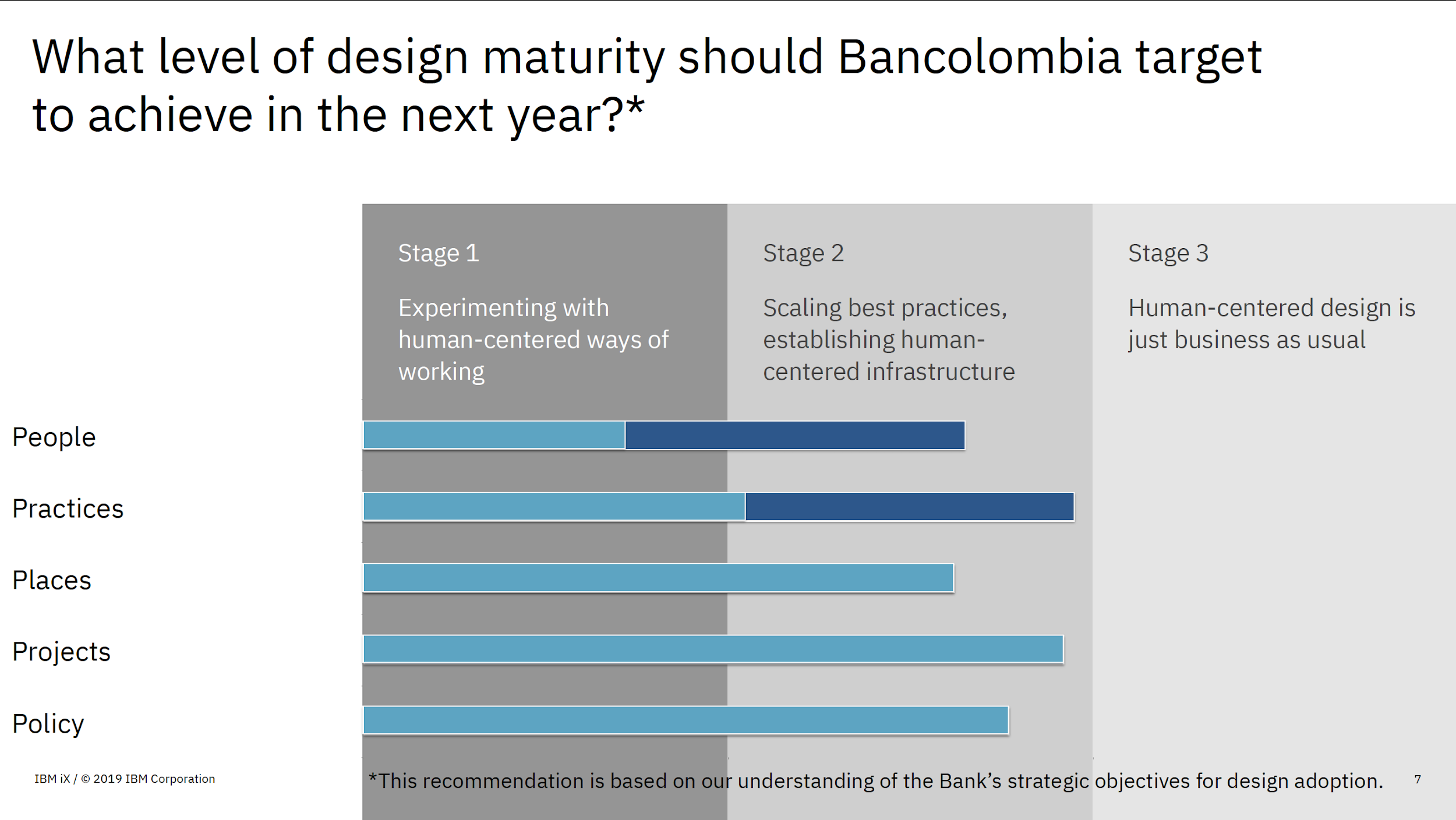
Start with the maturity baseline
The engagement used a design-maturity assessment and stakeholder discovery to make the current state visible. This grounded the conversation in how design decisions were made, how teams were supported, and what would need to change to scale the practice.
Define how the CoE would operate
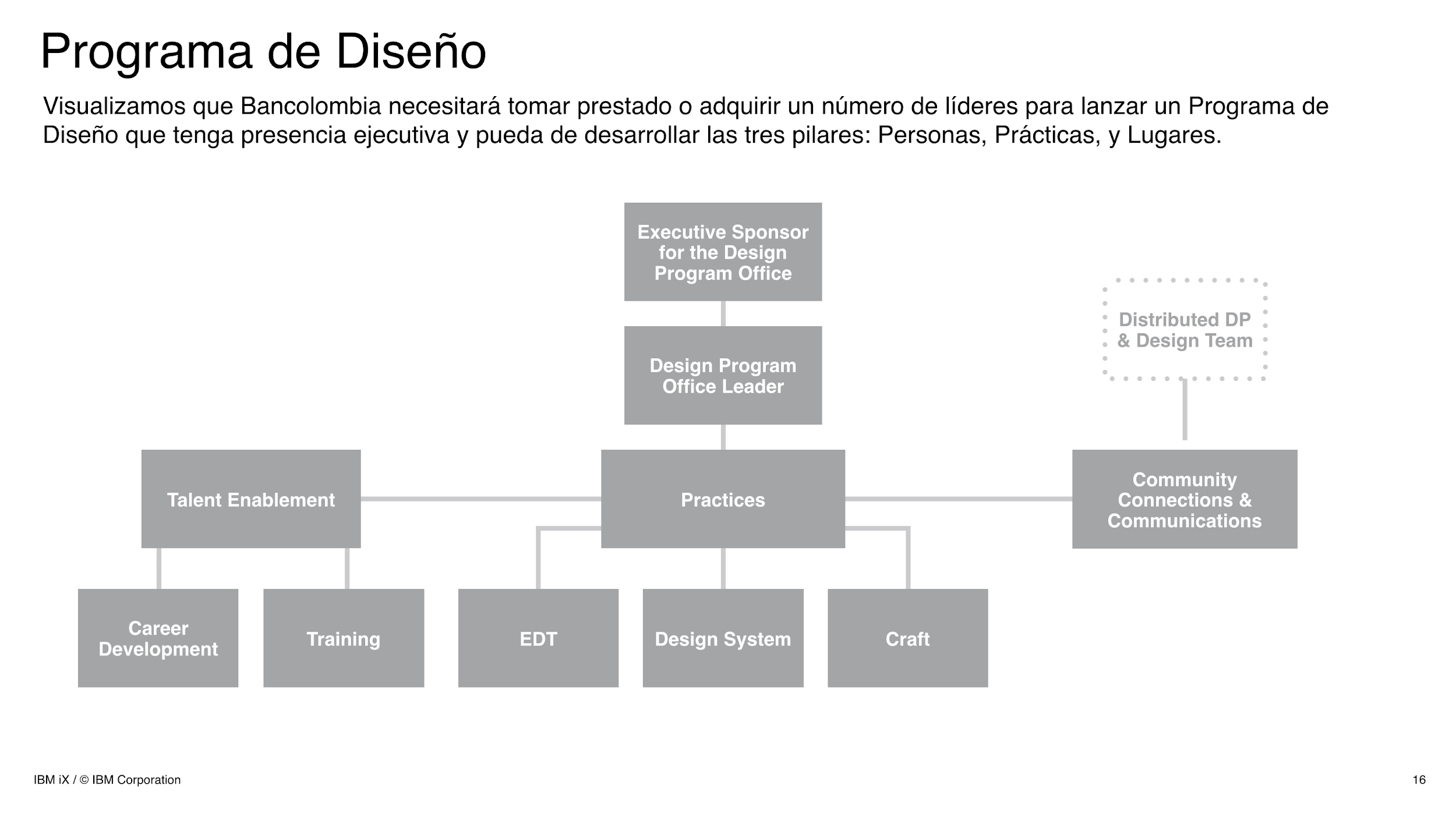
We developed recommendations for governance, program roles, design-practice roles, and how design leadership could participate in strategic decisions. The model also considered support aligned to business units, so a central practice would enable teams rather than slow them down.
These were proposed operating-model decisions for Bancolombia to evaluate and own. My contribution was helping make the options and their implications concrete through discovery, synthesis, and cross-functional discussion.
How we worked
Bring the right voices into the room
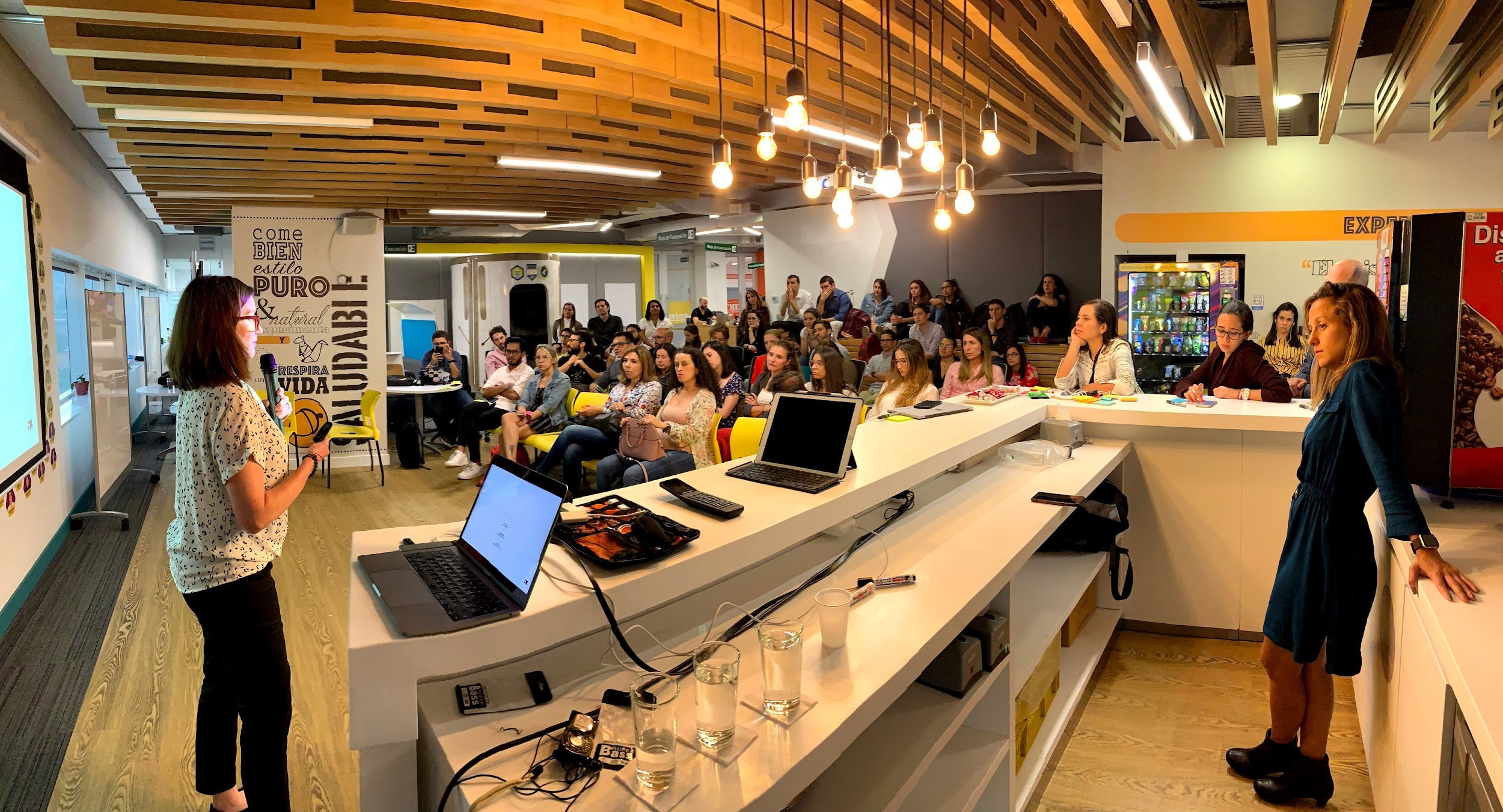
The IBM iX team planned interviews with people across the bank to understand the design program from several perspectives. Workshops explored the links among stakeholders, goals for each area, and the representative roles needed to define and manage the practice.
I used those conversations to keep the recommendations tied to the people who would live with them. Governance, staffing, and review routines needed to support both leaders making decisions and teams doing the work.
From insight to operating model
Connect design to business decisions
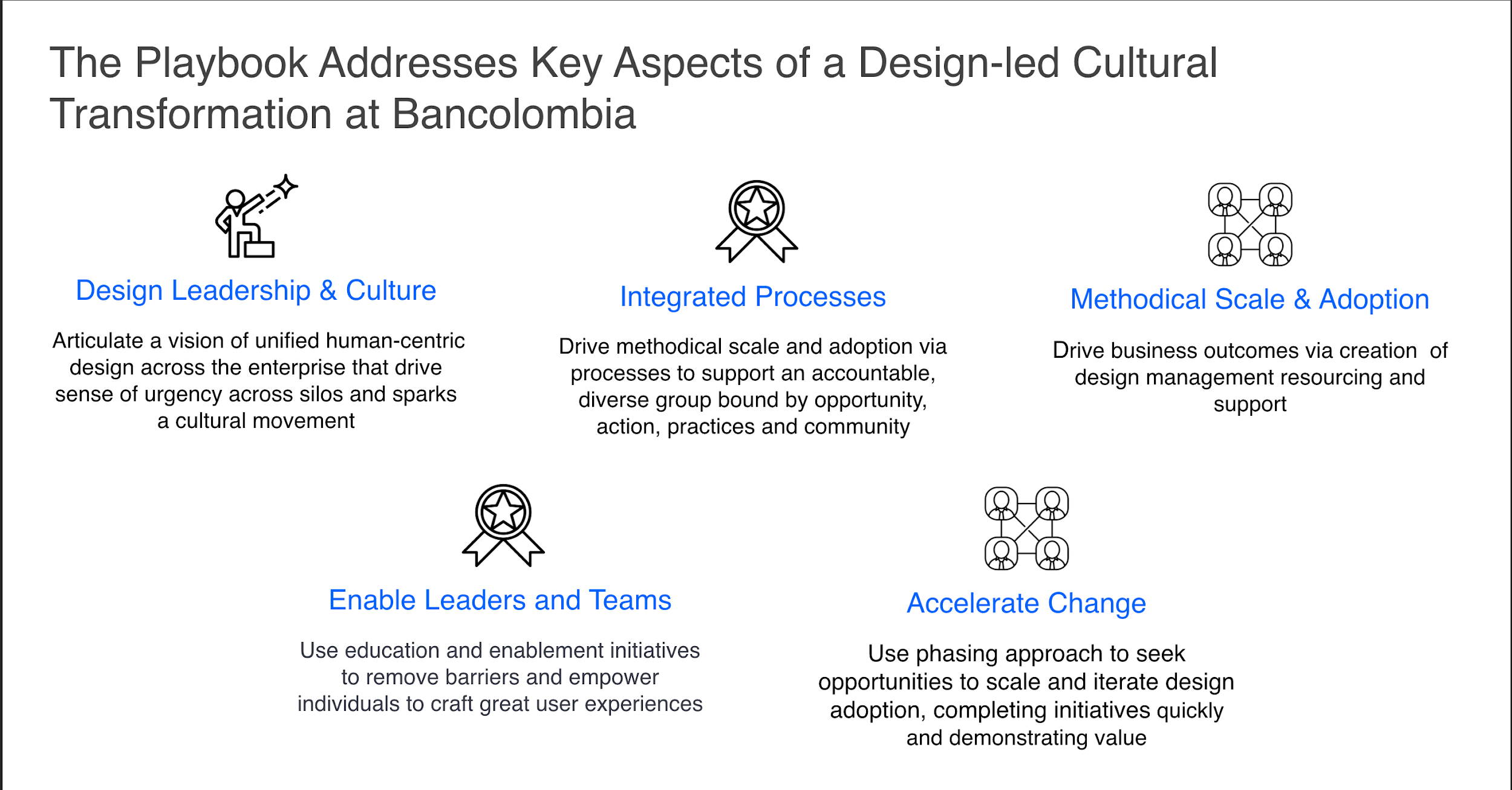
The proposed model put design leadership into strategic decision points and called for regular reviews of anticipated user and business impact. That helped frame design as a capability with accountable outcomes, not simply a production service.
Build the practice as well as the process
Recommendations addressed talent, practices, and community together: shared design assets, a career and training framework, enterprise design-thinking advocacy, and support for staffing. These pieces gave the Center of Excellence a path to grow through people, not only governance documents.
Give leadership a sequence to evaluate
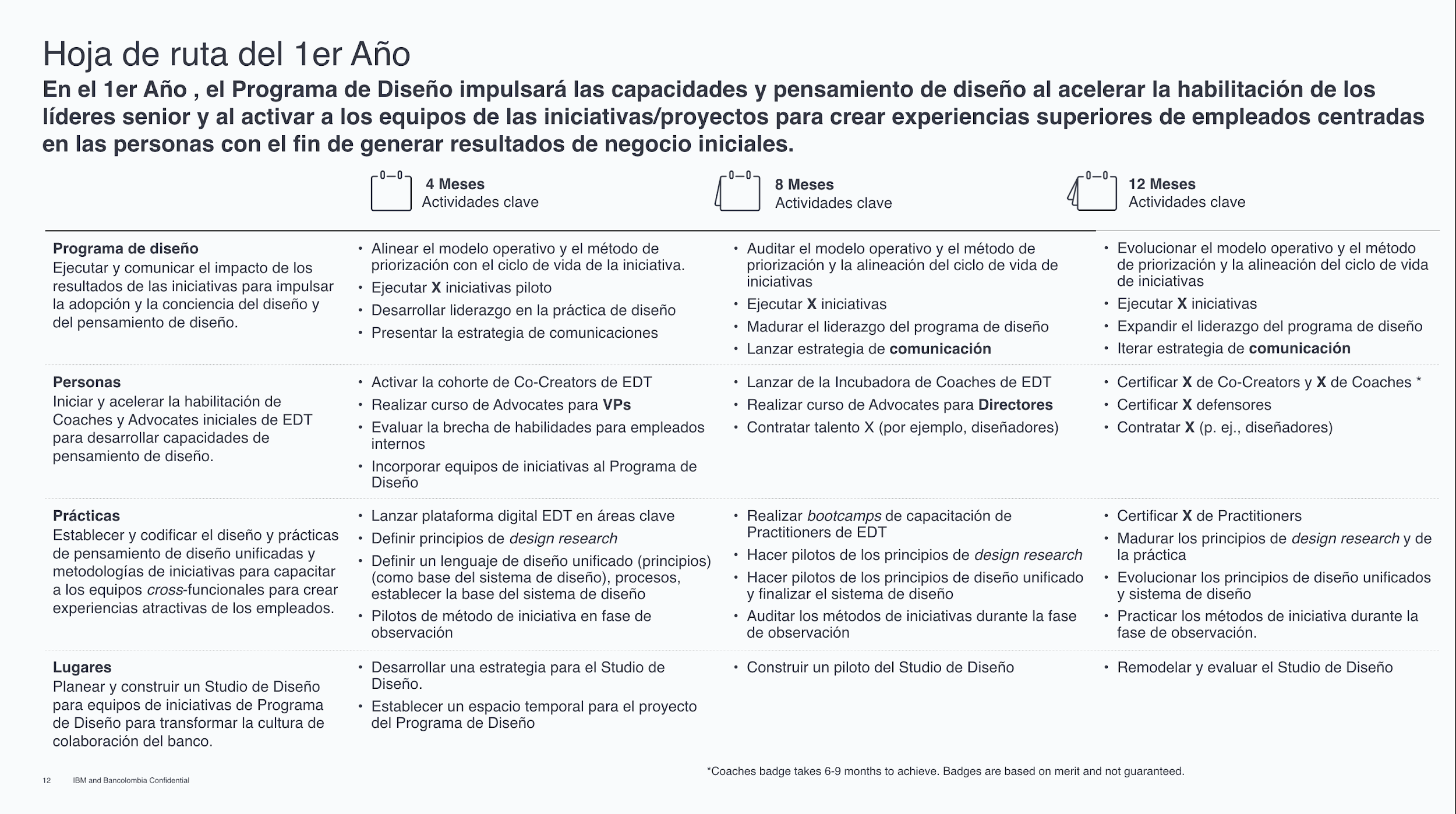
The implementation roadmap separated near-term foundations from longer-term adoption. It helped leaders discuss where to begin, what required sponsorship, and how success could be assessed over one year and beyond.
What the work produced
A clearer operating model
The team outlined governance, program roles, and design-practice roles for a more coherent enterprise design capability.
A path for adoption
The roadmap connected leadership sponsorship, shared practices, talent development, and design-system work rather than treating each as a separate initiative.
Success measures to agree
The recommendations included one-year and longer-term measures. They gave Bancolombia a basis for assessing adoption and investment; they are not presented here as measured business results.
How I would measure progress
A Center of Excellence succeeds when teams use it and leaders make better decisions with it. I would establish a baseline with Bancolombia before reporting change in the three areas below.
Practice adoption
Business units using shared design practices, assets, and review points. Shows whether the model is spreading beyond the initial group.
Design in decisions
Strategic decisions with design leadership involved early enough to shape options and review user impact.
Capability growth
Designers supported through clear roles, learning paths, community practices, and staffing support.
What I carry forward
Build capability people can carry forward
The most useful CoE is one people can operate without the consultants who helped define it. The work taught me to connect executive ambition with the roles, routines, and support teams need day to day.
I would validate adoption and outcomes after implementation rather than treating an approved roadmap as proof of change. Clear ownership and measured learning make the capability durable.
I would validate adoption after implementation rather than count an approved roadmap as impact. Bancolombia’s own structure and teams would determine which rituals and roles endured; measures and feedback would show where the model needed to adapt.
