
Making self-service work for FIGLab
Connecting a new client experience with the design and delivery work behind it.
- UXD, DPM & DesignOps

- Stifel - Jan to Sept 2024·

The starting point
Routine client requests were taking time from analysts’ higher-value work. FIGLab offered an opportunity to make common tasks more accessible through self-service while supporting a move toward a subscription-based offering.
My work connected UX design with delivery coordination: shaping workflows people could use, making progress visible, and keeping business and engineering partners involved.
My contribution
I led
Design planning, sprint reviews, retrospectives, and stakeholder progress discussions for the UX work.
I partnered
With business stakeholders on client needs and the subscription experience, and with engineering on integration, performance, and implementation.
I worked hands-on
On interface design, interactive prototypes, iteration from user feedback, and design-to-development handoff materials.
The challenge
Self-service has to earn trust
A task that once involved an analyst needed to make sense to a client acting independently. The experience had to communicate value, support routine workflows, and fit the systems behind it.
The business ambition and the user experience were linked. Subscription decisions required business partnership; the design work needed to make the resulting service understandable and usable.
A shared plan
Connect milestones to the work
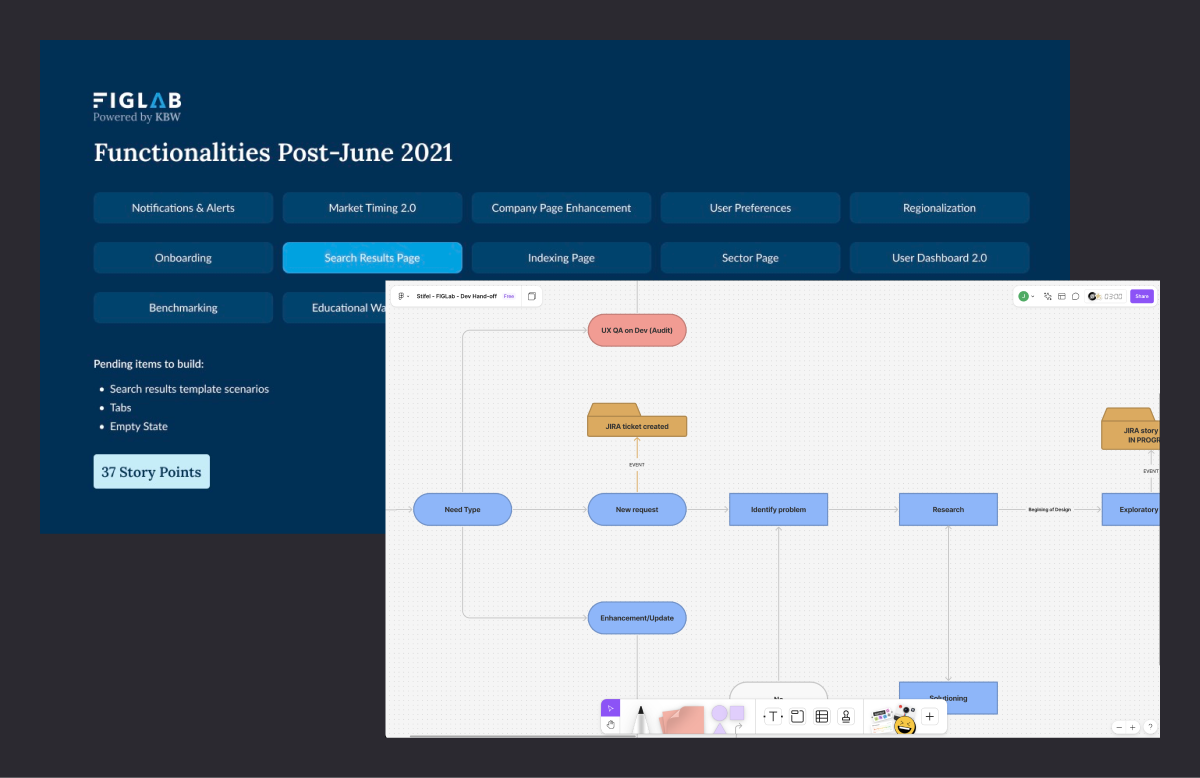
I organized tracking and review routines around FIGLab’s deliverables. A Jira board, weekly stakeholder updates, and sprint reviews gave the team a shared way to discuss progress, priorities, and risks.
Stay close to implementation
I coordinated handoffs through Figma and Zeplin and worked with engineering on technical considerations. The goal was to carry design intent into development with enough detail for useful discussion.
Design decisions
Understand the work before simplifying it
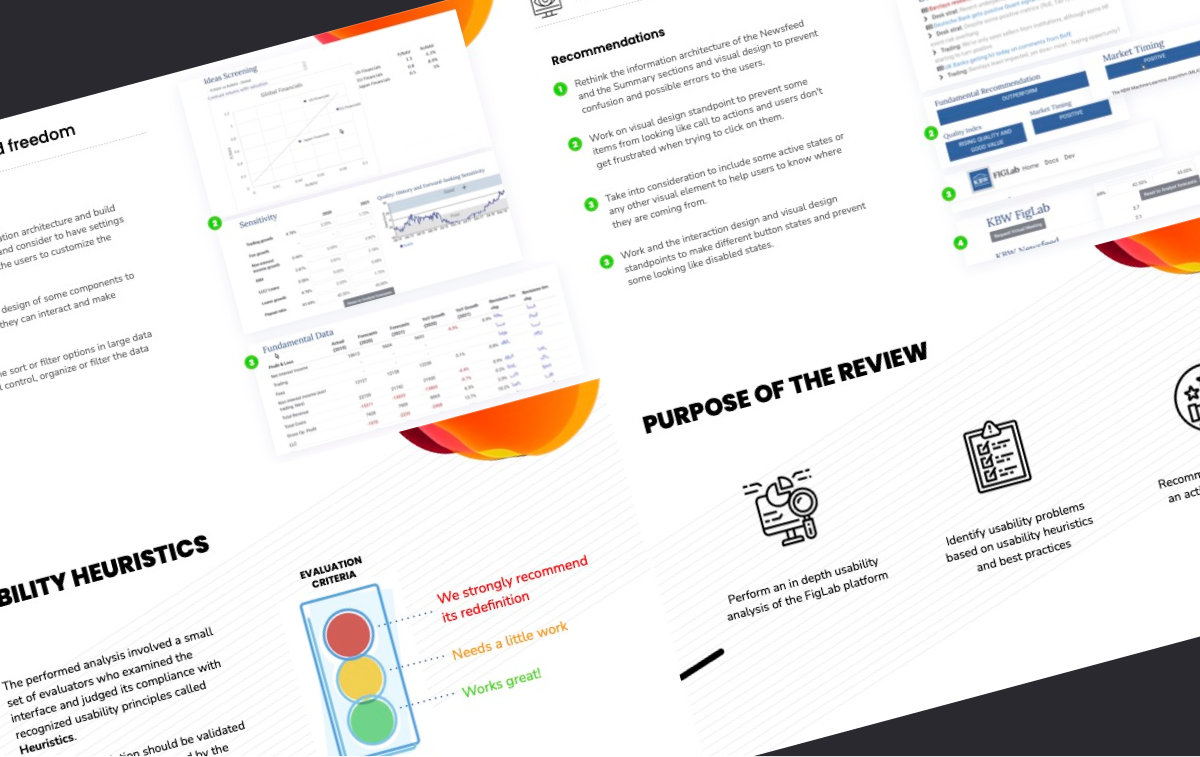
Stakeholder interviews, user research, and competitive review informed the self-service direction. I used those inputs to shape prototypes for routine client workflows.
Give the team something to test
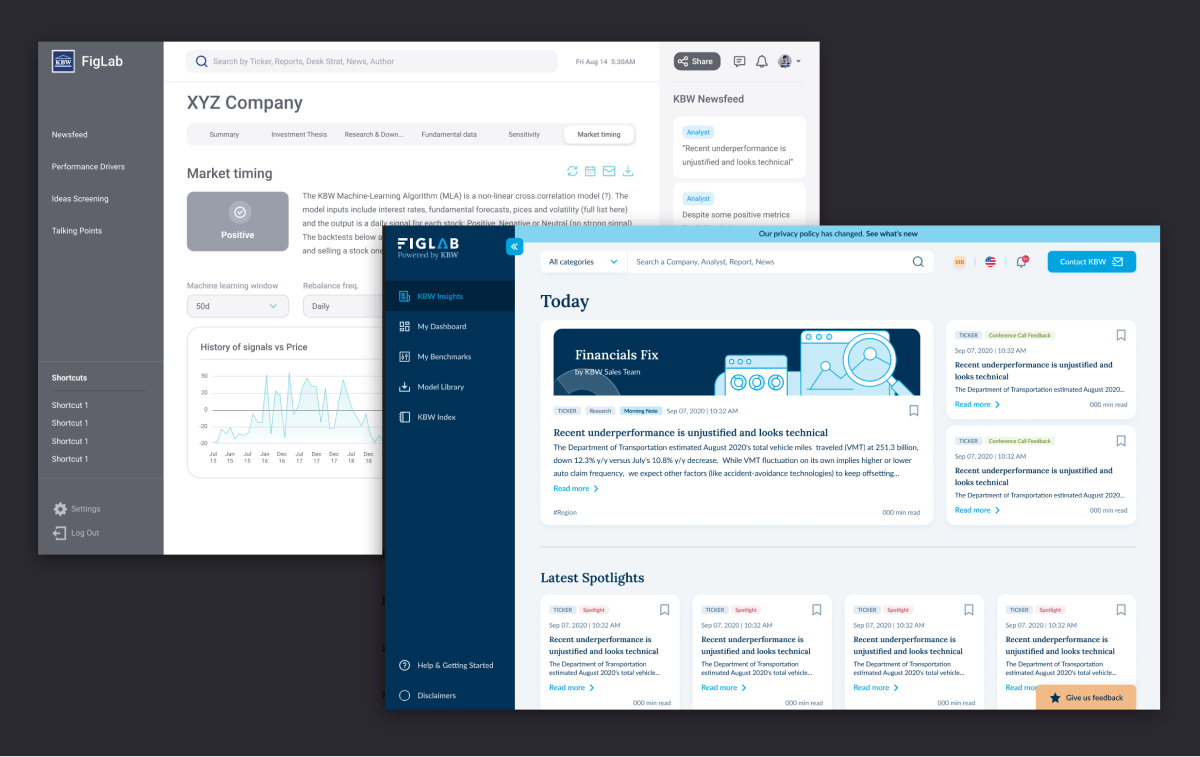
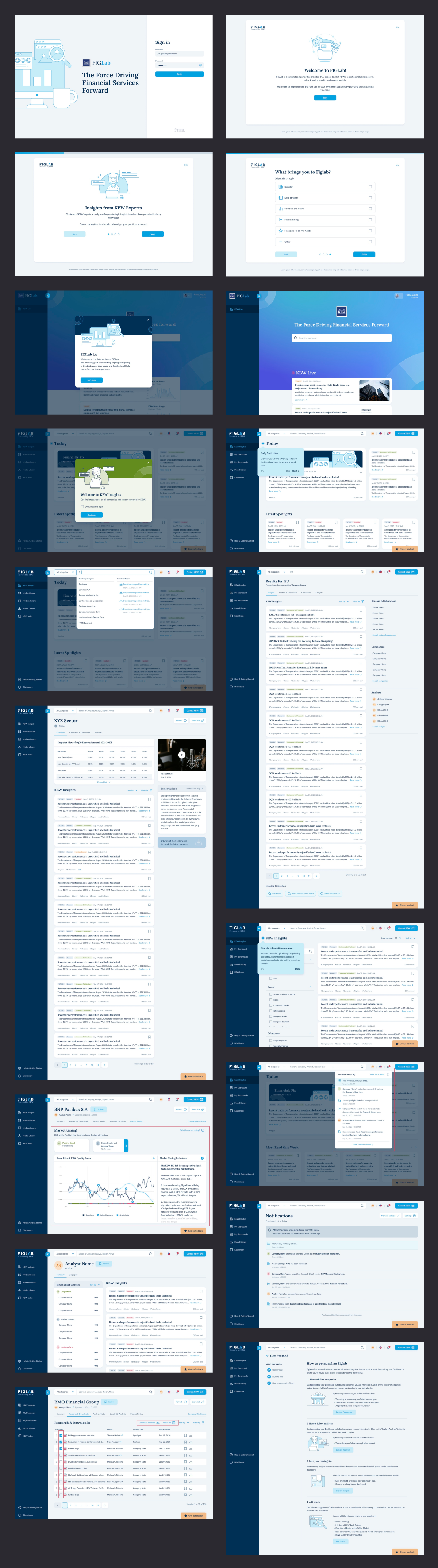
Interactive prototypes and unmoderated usability testing provided inputs for refinement. Iterating from early structures to detailed screens kept the discussion grounded in what clients would actually use.
What took shape
A tangible self-service experience
The work produced interactive prototypes, refined interface designs, and handoff materials for FIGLab. Review routines connected those deliverables with business priorities and engineering considerations.
The subscription model was a shared business initiative. My contribution was shaping its experience and helping coordinate the design work needed to support it.
How I would measure progress
I would establish a baseline for these measures, then agree targets with the team. Together, they would connect the quality of the experience with the decisions needed to move delivery forward.
Independent task completion
Clients who complete priority workflows without analyst assistance. Shows where self-service is working and where support is still needed.
Time on routine tasks
Median completion time for comparable tasks. Helps prioritize improvements that give clients and analysts time back.
Analyst assistance
Assistance requests per 100 completed tasks. Shows whether the experience reduces avoidable support while protecting service quality.
What I carry forward
Design the service and the delivery together
Self-service involves more than removing a conversation with an analyst. It means understanding what that conversation helped the client accomplish. I would bring subscription-management scenarios into early testing and keep those needs connected to delivery planning.
