
Connecting the journey across Okta and Auth0
Leading design and delivery alignment while protecting what made each audience’s experience valuable.
- UXD, DPM & DesignOps

- Okta – Jan–Dec 2023

The starting point
Two established brands. Different audiences. One relationship to make clearer. The work across Okta.com and Auth0.com needed to connect the customer journey without losing the developer experience people already relied on.
My contribution combined design leadership, program coordination, and hands-on UX. I helped connect strategy, content, navigation, and the practical work of bringing a shared direction to life.
My contribution
I led
Design direction and the coordination of discovery, reviews, and delivery priorities across the project.
I partnered
With strategy, creative, content, business stakeholders, and engineering on brand positioning, product definitions, and implementation decisions.
I worked hands-on
On information architecture, navigation recommendations, design reviews, and presentations that translated research into a direction stakeholders could evaluate.
The challenge
Connect the brands without flattening the experience
Okta.com needed to communicate the breadth of the identity offering. Auth0 needed to preserve a distinct path for developers to learn, try, and get support. A coherent experience had to respect both goals.
Product groupings, solutions, and pricing also needed business definition. Navigation could make those decisions visible, but design could not resolve them alone.
A shared plan
Build on the work already done
I brought existing taxonomy, content audits, journey research, and navigation proposals into the IA discussion. That gave our recommendations a shared starting point across internal teams and partners.
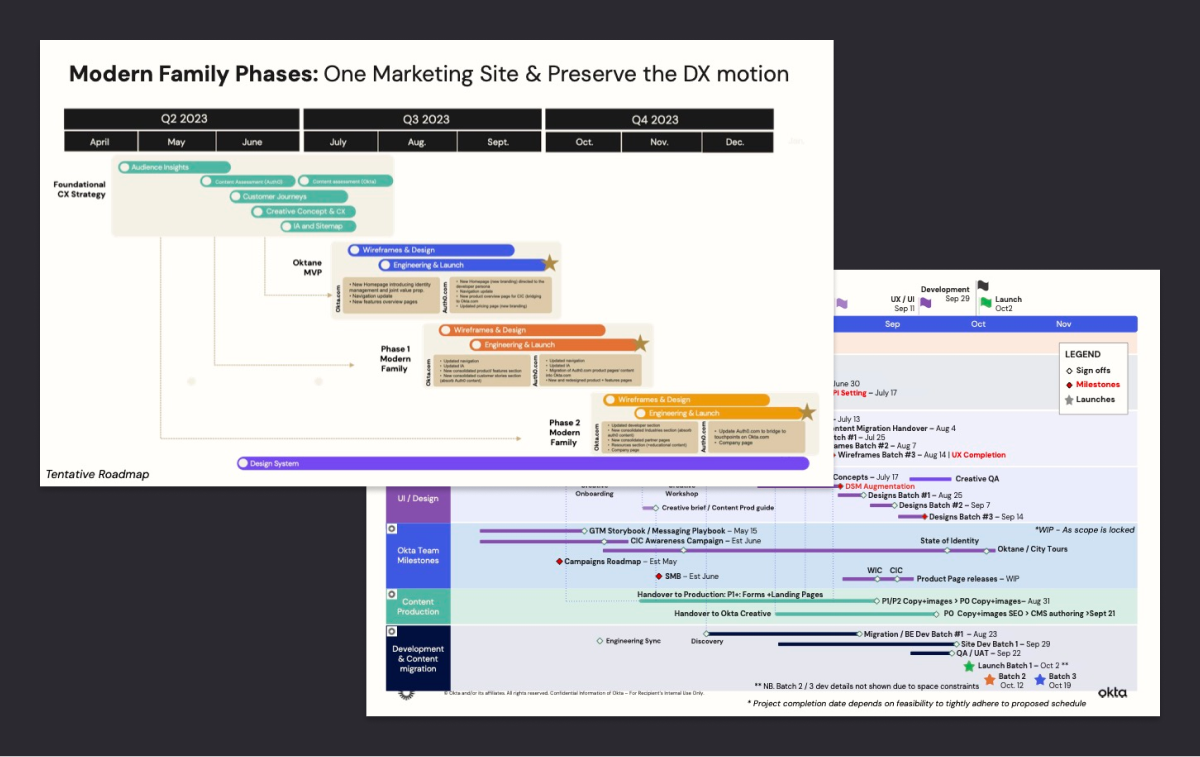
Keep discovery and delivery connected
Shared tracking, regular team check-ins, stakeholder reviews, and retrospectives gave us a rhythm for discussing dependencies and refining the work.
Design decisions
Give each audience a recognizable path
I presented Okta.com as a gateway to the broader identity offering, with clearer connections to Auth0’s developer experience. The recommendation linked the brands while preserving audience-specific journeys.
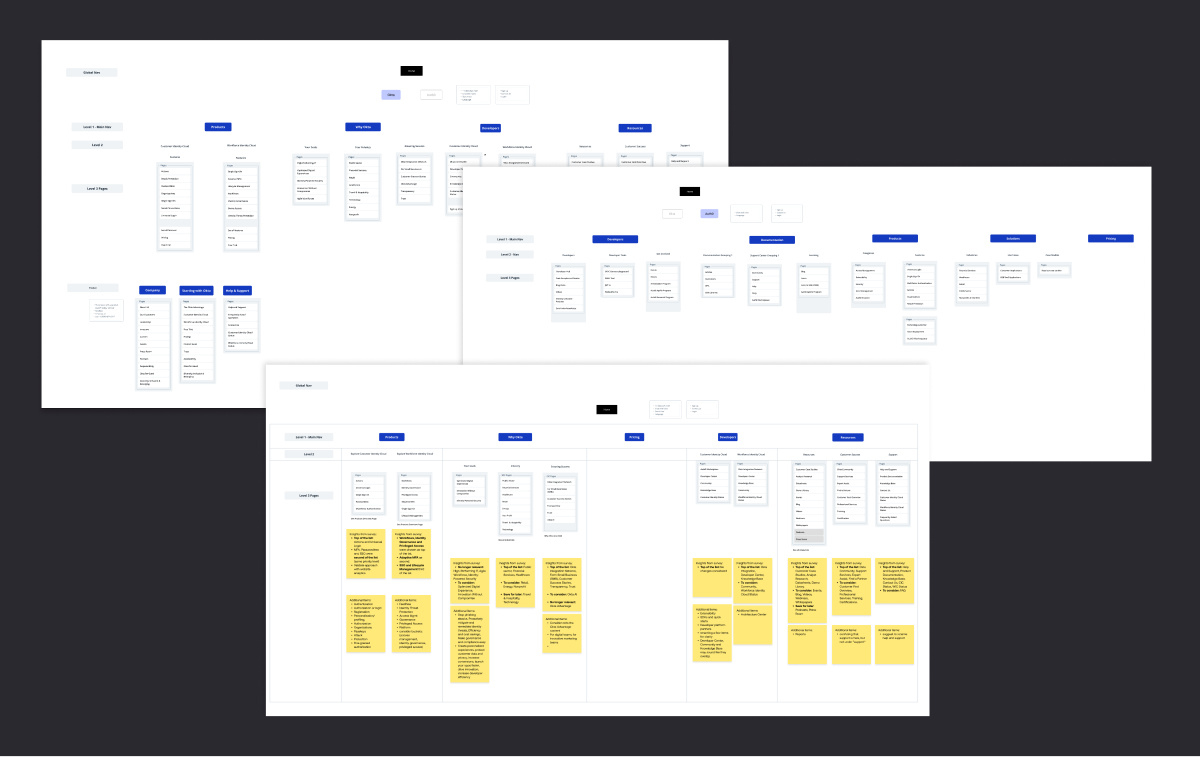
Make the direction concrete
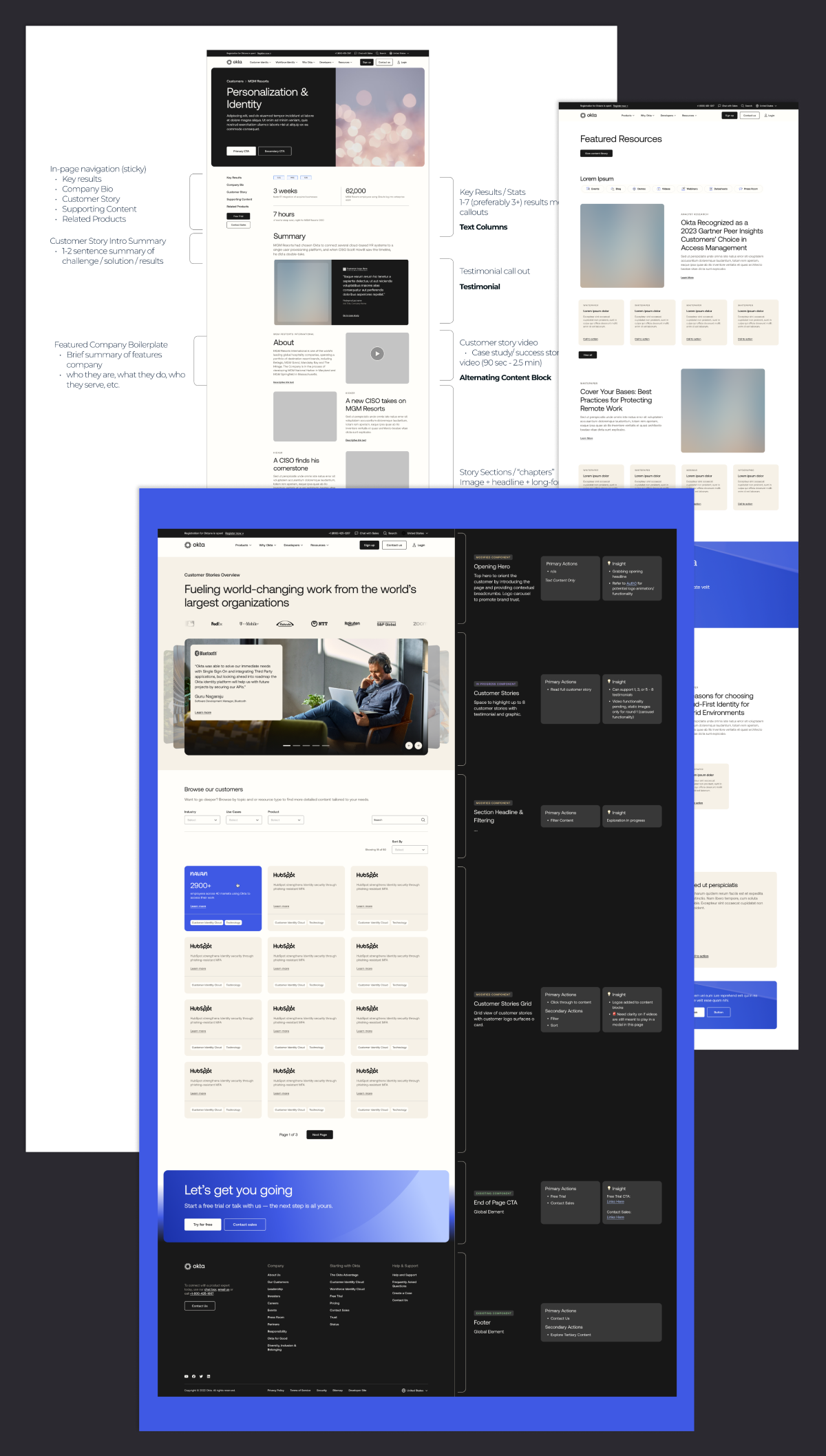
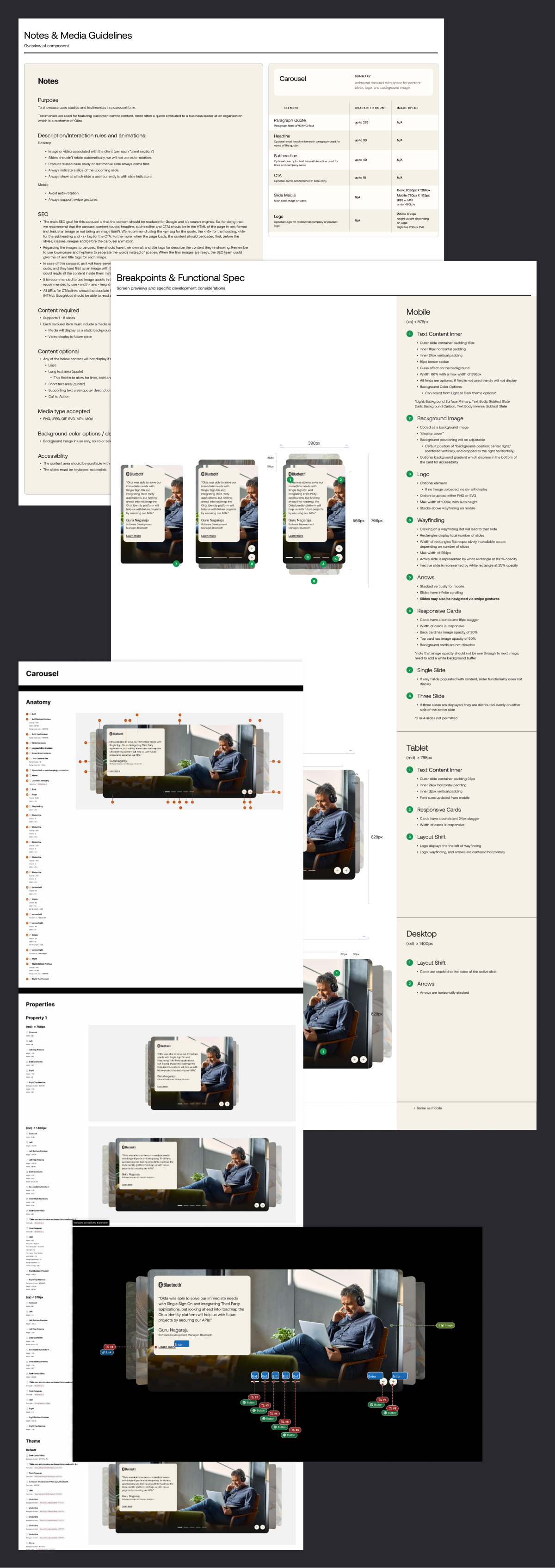
Wireframes and reusable design patterns brought the proposed experience onto the screen. Content and localization considerations helped the team look beyond a single page or market.
What took shape
A direction teams could discuss together
The work produced navigation recommendations, prototypes, and design-system materials connecting the two digital experiences. Shared reviews linked design choices to business and content decisions.
These were collaborative outputs. My role was to guide the design and coordinate the work around it—not to claim sole ownership of the brand strategy or implementation.
How I would measure progress
I would establish a baseline for these measures, then agree targets with the team. Together, they would connect the quality of the experience with the decisions needed to move delivery forward.
Journey success
Visitors who reach the right Okta or Auth0 resource in task-based testing. Shows whether the connection between brands is clear.
Time to the right resource
Median time to find a relevant product, developer resource, or support path. Helps identify where the experience needs refinement.
Decision turnaround
Time to resolve shared navigation, content, and ownership decisions. Helps leadership address dependencies affecting delivery.
What I carry forward
Alignment needs something people can react to
A broad ambition becomes useful when teams can discuss a specific journey, label, or page. I would bring product definitions and localization responsibilities into the earliest planning conversations, so unresolved decisions are visible before they become delivery dependencies.
